Remarks by Director of Insurance, Seána Cunningham to the UN Environment Programme Global Sustainable Insurance Summit, Dublin
18 September 2026
Speech
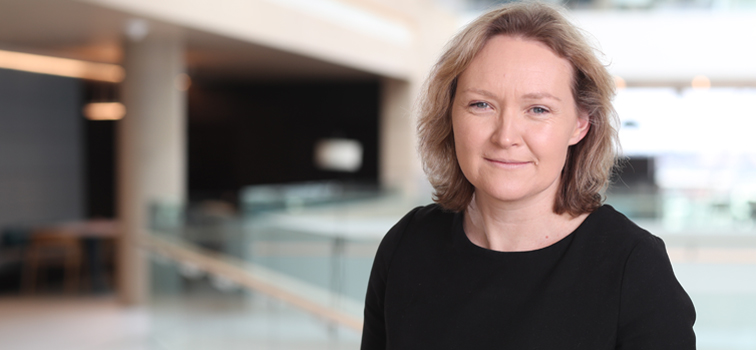
On behalf of the Central Bank of Ireland, I am delighted to welcome you all here to Dublin for the UN Environment Programme Global Sustainable Insurance Summit.
This is a significant week for Dublin and the Irish Presidency of the EU. Not only do we have the annual Climate Finance week, Ireland is also hosting the Eurofi conference, and the informal ECOFIN conference of EU finance ministers. It is great to see so many people converge on Dublin, with Global Sustainable Insurance at the heart of the discussions.
One of the most pressing risks we face today is climate change. The physical risks reshaping our climate are not distant concerns, they are present-day challenges demanding urgent action from regulators, insurers, and policymakers alike.
In Ireland, like most countries, we are seeing the impacts of climate change. Last year, we experienced the most expensive storm-related insurance event in Irish history. Storm Éowyn was an exceptionally powerful storm which caused significant damage, resulting in insurance claims totalling approximately €300 million.
In her State of the Union Address yesterday, President von der Leyen, in speaking to climate change, referred to this summer as “the summer of truth”, noting that almost no part of our continent was spared.
Climate extremes are putting a strain on the financial, societal and ecological systems that we rely on.
A recent UN report concluded that we will hit at least 1.8 degrees of warming, and that there are “no good outcomes above 1.5 degrees1”. The urgency is real.
In the Central Bank we are led by evidence, and we follow risks. The risks from climate change are not going away, and will only increase with delay. We are not yet on a sustainable trajectory, and we can see loss of momentum in some parts of the world.
The Central Bank is staying the course on climate for this reason; as we lose momentum, risks increase. The need for the transition to a more sustainable way of living is clear, as is the risk associated with not transitioning.
The topics on the agenda today highlight the important role of insurance in that transition.
At its heart, insurance is about confidence. It is a critical enabler for society to function, giving individuals and businesses confidence to make investments, absorbing the risks that make economic activity viable, and providing compensation if something goes wrong.
The continued availability of insurance, in a sustainable way, in the face of increasing climate risks is a very important topic for the Central Bank.
When insurance markets retreat from high-risk areas, we can see a cascade of consequences: reduced investment, lower property values, constrained economic activity, and ultimately, systemic financial instability.
The answer is not simply to force insurers to cover uneconomic risks — that would be unsustainable. Rather, we need innovative solutions that deliver long-term sustainable results.
This will likely include a combination of innovative insurance products, improved data sharing across the industry and government departments, improved data on climate hazards, and integration of adaptation and resilience measures to reduce the underlying risk.
Solving these challenges requires collaboration across all relevant stakeholders. The Central Bank of Ireland is looking forward to continuing our engagement with government, and with the insurance industry, to develop a long term, sustainable response to the flood protection gap in Ireland, through the new working group the Department of Finance is establishing.
And of course, we all heard yesterday of the EU Commission’s plans to set up a Climate Insurance Alliance, which is very welcome.
I think we are beginning to witness an evolution of the insurance sector, moving from where insurance is just a reactive product, paying out when a certain event happens. We are starting to see much more proactive engagement, where insurance companies act as risk partners, helping individuals to invest in their own resilience.
When insurers demand higher resilience standards as a condition of coverage, they create powerful incentives for risk reduction. There is a clear alignment of incentives between insurers and the insured when it comes to risk reduction.
We see this happening, but it is generally limited to large risks or business insurance. There is an opportunity for insurers, and for other actors in insurance markets to support households to both understand their risk and take action to reduce that risk.
The Central Bank is happy to be one of the pilot countries testing the EIOPA risk awareness tool which looks to do exactly that, by setting out information on what policyholders can do before, during and after a flood event.
Much of the discussion around sustainable investment has naturally been on climate mitigation. This should be the priority. Without investment in mitigation, we lock in unsustainable levels of global heating.
But there is also a need for adaptation finance, to respond to the levels of heating that are already baked into the system.
The Central Bank authored a report at the end of last year with the Climate Change Advisory Council on barriers to adaptation finance. Removing these barriers, and unlocking investment in adaptation, by insurers, and by the wider financial system, is key in order to build community resilience.
Conclusion
The insurance industry stands at a crossroads. It can and should innovate and lean into its role as a catalyst for resilience — pricing risk accurately, incentivising adaptation, supporting transition, and investing in the data and infrastructure that make markets work.
I am really looking forward to hearing the discussions today.
Thank you
Many thanks to Rory McElligott and Chris Joyce for their help preparing these remarks.