Key Insights
Trust is a central element of monetary and payment systems, and it plays a particularly important role when assessing the prospects for the digital euro. Ireland’s digitally advanced payment landscape provides useful context for understanding how households view the potential for digital euro adoption.
Across the euro area, Irish respondents are the fourth most likely to report being willing to use the digital euro, with trust in the euro and institutions strongly associated with adoption intentions. While 90% of Irish respondents view the traditional form of physical euro positively, digital euro awareness remains below the euro area average (at 49%), highlighting the need for enhanced public communication as the project progresses.
Digital euro awareness and adoption intentions within Ireland vary modestly across demographic groups, with men, older respondents, and the financially literate showing consistently higher awareness, willingness to adopt, and emphasis on key features such as security and business acceptance.
Introduction
Central bank money in the digital age
The digitalisation of payments is reshaping how people interact with money. Across Europe, cash remains an important means of payment, yet its everyday use has been declining as consumers increasingly turn to cards and mobile solutions. In this context, the Eurosystem is exploring the introduction of a digital euro – a new form of central bank money designed as a digital complement to cash. The European Central Bank (ECB) launched the digital euro project’s investigation phase in October 2021, followed by a preparation phase from November 2023 to October 2025, when the Governing Council decided to continue preparations and move to the next phase. The digital euro would be issued by the ECB, accessible to everyone, and available for everyday payments. The goal is not to replace cash, which will always be available, but to ensure that public money continues to be a payment choice in an increasingly digital economy.
Public money and the trust anchor
As the payments landscape evolves, the role of public money must evolve with it. The traditional two-tier monetary system relies on the interchangeability of central bank money and commercial bank deposits based on individual trust in the system, which is currently underpinned by a system of regulation, oversight and deposit insurance. Ensuring that central bank money remains accessible in the digital age preserves its role as the anchor of the monetary system, a safeguard that has underpinned stability for over a century. The digital euro would not replace cash but complement it, reinforcing the resilience of public money and the central bank’s role as the foundation of trust in the system.
Irish consumers at the digital frontier
Ireland has one of the highest adoption rates of digital payments and financial services in the euro area, with households and businesses embracing digital transactions more intensively than many peers. This high degree of “digital readiness” makes Ireland an interesting case to understand the potential for the digital euro.
This Insight examines the prospects for the digital euro in Ireland using data from the ECB’s Consumer Expectations Survey (CES), from 2022 to 2025. We compare euro area member states across three key areas: awareness of the digital euro, likelihood of adoption for daily transactions, and the importance of specific features. We then explore how these attitudes vary across Irish demographic groups, including by gender, age, employment status, and financial literacy. The analysis also examines how trust in institutions – including attitudes toward the euro, trust in central banks, and trust in commercial banks – correlates with willingness to adopt the digital euro. The findings provide a foundation for understanding the potential uptake of the digital euro in Ireland and set the scene for future research in this area.
ECB Consumer Expectations Survey
The CES is an online rotating panel survey conducted monthly by IPSOS Public Affairs on behalf of the ECB, with a target maximum participation duration of 24 completed survey rounds. First piloted in January 2020 and made permanent from July 2021, the survey collects high-frequency, cross-country, comparable data on euro area consumers’ perceptions and expectations regarding the economy, as well as their economic and financial behaviour. The CES targets the adult population residing in eleven euro area countries – Belgium, Germany, Ireland, Greece, Spain, France, Italy, the Netherlands, Austria, Portugal, and Finland. The survey employs a mixed-mode sampling design with a current target of approximately 19,000 respondents per monthly wave (including c. 1,000 from Ireland).
This Insight uses the CES August topical module on central banking, which captures respondents’ attitudes towards the euro as well as trust in commercial banks. The module also collects data on payment behaviour (including cash use and access to digital payment infrastructure), awareness and attitudes toward digital financial services, and the digital euro.
Ireland and the Euro Area
This section analyses Irish attitudes toward the digital euro using the CES, comparing Ireland with other euro area countries. The analysis covers survey data from 2022 and 2025, examining three key areas: awareness of the digital euro, likelihood of adoption for daily transactions, and importance of specific features. Ireland’s digitally advanced payment and financial service landscape provides useful context for understanding how Irish consumers view this potential new form of central bank money.
Digital euro awareness
Just over half (53.2%) of respondents in the euro area were aware of the digital euro as of August 2025, up from 19.8% in 2022 (Figure 1). Despite its strong performance in other digital payment metrics, Ireland demonstrates below-average digital euro awareness, with an overall awareness rate of 48.9% in 2025. This positions the country eighth among eleven countries surveyed. Austria leads with the highest awareness at 71.4%, followed by the Netherlands at 62.5%, while France and Belgium recorded the lowest awareness rates at 39.4% and 40.3%, respectively.
More than half of euro area respondents are aware of the digital euro, with Ireland below average
Figure 1: Digital euro awareness, 2022-2025
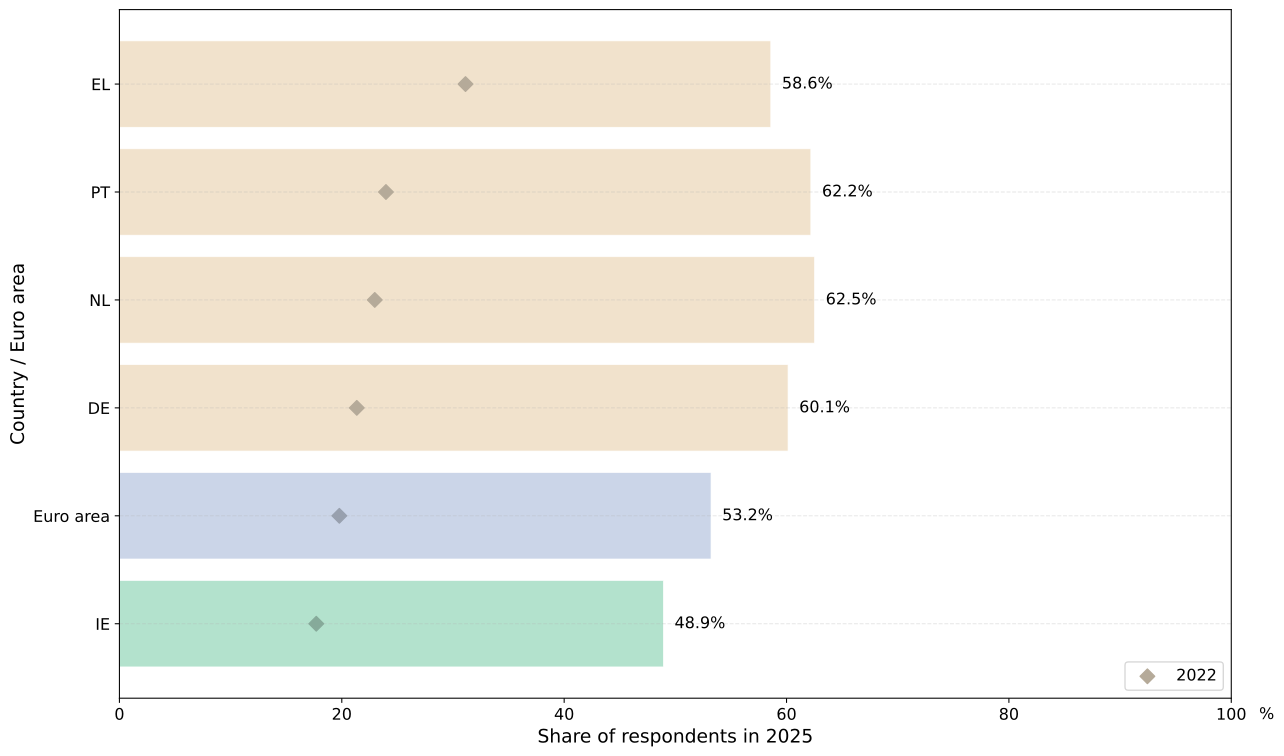
Source: Authors’ elaboration based on the CES. Wave 32 (August 2022, diamond) and Wave 68 (August 2025).
Accessibility: Get the data in accessible format. (CSV 0.37KB)
Digital euro adoption likelihood
Questions on hypothetical usage and features of the digital euro were only asked in Wave 32 (August 2022). Therefore, the figures in this section and the next refer to that period only. The Central Bank of Ireland is conducting an independent survey in 2026 to gather up-to-date information on these topics.
Greece had the highest rate, with 31.6% of respondents indicating they are likely or very likely to adopt the digital euro for day-to-day transactions, followed by Italy (30.5%) and Portugal (29.7%) (Figure 2). Conversely, countries in northern and central Europe demonstrate greater scepticism toward digital euro adoption. The Netherlands ranks last with 14.4%, followed by Belgium (15.9%) and Austria (16.8%).
Ranking fourth out of eleven-euro area countries at 26.3%, Ireland is positioned close to the euro area average of 23.1%.
Ireland shows moderate enthusiasm for digital euro adoption, ranking fourth overall
Figure 2: Digital euro hypothetical usage for day-to-day transactions
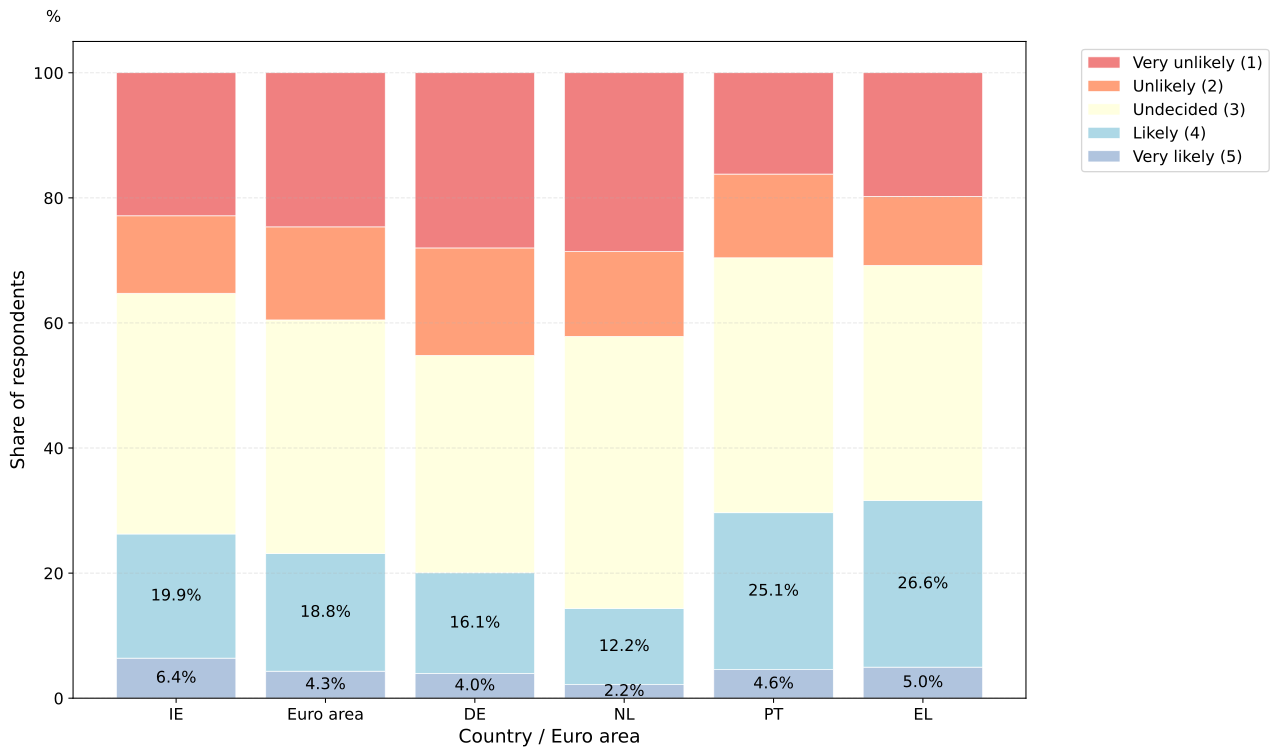
Source: Authors’ elaboration based on the CES. Wave 32 (August 2022).
Accessibility: Get the data in accessible format. (CSV 0.46KB)
Digital euro design features
The survey asks respondents to value eight features of the digital euro on a scale from 1 to 5. Irish respondents report higher importance than the euro area average across all eight features (Figure 3) and record the highest average rating among the eleven euro area countries in seven of them, ranking second, after Austria, only in the privacy concerns feature.
Respondents in both Ireland and the euro area place the highest value on security and facing no extra costs. Business acceptance, ease of use, and privacy follow with slightly different rankings between Ireland and the euro area average, with Irish respondents prioritising business acceptance and euro area respondents weighing privacy concerns more heavily.
Security and no extra costs are top digital euro priorities, with Ireland leading in importance
Figure 3: Importance of digital euro features
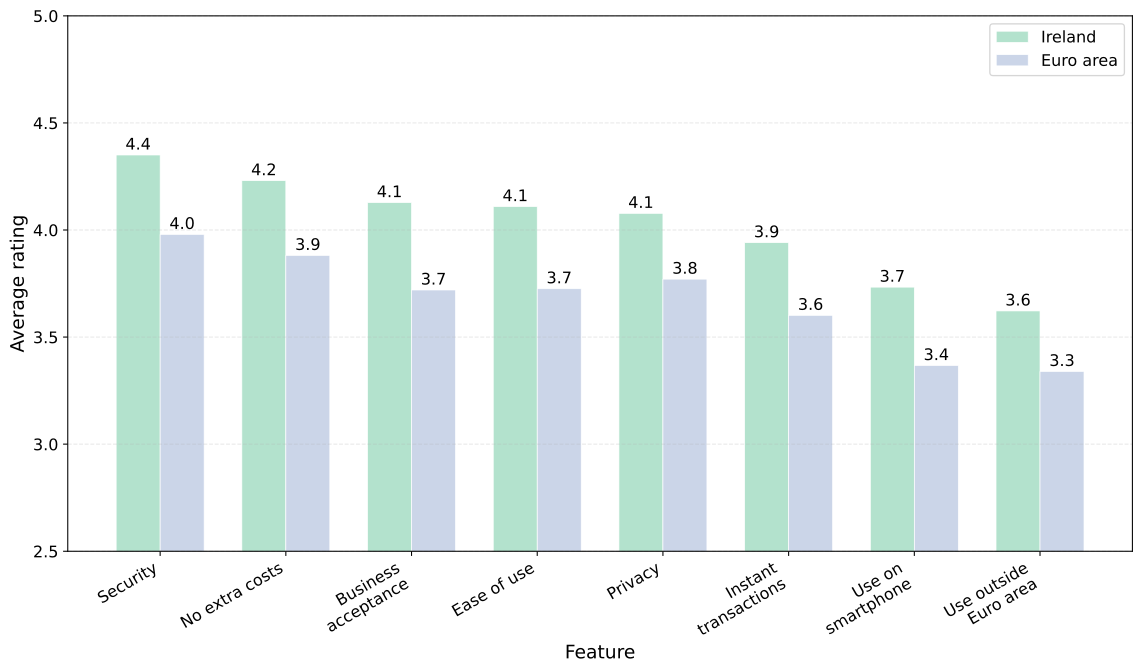
Source: Authors’ elaboration based on the CES. Wave 32 (August 2022).
Accessibility: Get the data in accessible format. (CSV 0.47KB)
Trust Analysis
Trust is a central element of monetary and payment systems, and it is likely to play a particularly important role when assessing the potential adoption of the digital euro. The CES includes several questions that enable us to explore how different dimensions of trust relate to individuals’ willingness to use a digital form of central bank money. Three measures are used in the analysis.
Trust in the euro
The CES includes questions on respondents’ attitudes towards the euro, in particular, evaluating how they feel about the euro in the country they live in. Respondents can answer that the euro is “a bad thing” (which is assigned value 0), or “a good thing” (value 1). This measure represents a proxy for trust in the euro in its traditional physical form. Since the digital euro is envisioned as an extension of cash into the digital age, public attitudes toward the euro provide valuable insight into how its digital version might be received.
Trust in the ECB and NCBs
The second measure reflects trust in the ECB and in National Central Banks (NCBs), measured on a discrete 0-10 scale from “no trust at all” (value 0) to “trust completely” (value 10). Since the digital euro would be issued by the Eurosystem and backed by central bank credibility, trust in central banks may influence perception of the safety and reliability of a future digital euro.
Trust in commercial banks
The third measure reports trust in commercial banks, measured using the same discrete 0-10 scale as for trust in central banks. The rationale for exploring this dimension differs from that behind the first two: whereas trust in the euro and central banks reflects confidence in the public sector, trust in commercial banks reflects confidence in the private sector actors that provide digital payment services today and are set to be key providers of digital euro services.
Methodology
The analysis focuses on the correlation between trust dimensions and a digital euro adoption for day-to-day transactions. Since the relevant question is asked only in wave 32 (August 2022) of the CES, the analysis is limited to that wave.
We use a weighted ordinary least squares (WLS) regression where the weighting accounts for the survey design using the ECB’s provided weights. The dependent variable is the likelihood of using a digital euro for day-to-day transactions, measured on a five-point scale from “very unlikely” to “very likely”. The main explanatory variable is one of the three trust measures detailed in the previous section.
In the analysis of the euro area pool, we include country fixed effects to control for unobserved institutional, regulatory, and cultural factors that might vary across the eleven-euro area countries in the sample. Standard errors are clustered at the country level to accommodate the potential within-country correlation in consumer responses.
To investigate whether the correlation between digital euro adoption intentions and trust measures varies across countries, we run the WLS regressions for each of the eleven countries individually (without country fixed effects and clustering). This approach enables us to examine the magnitude of the association for Ireland individually.
Results
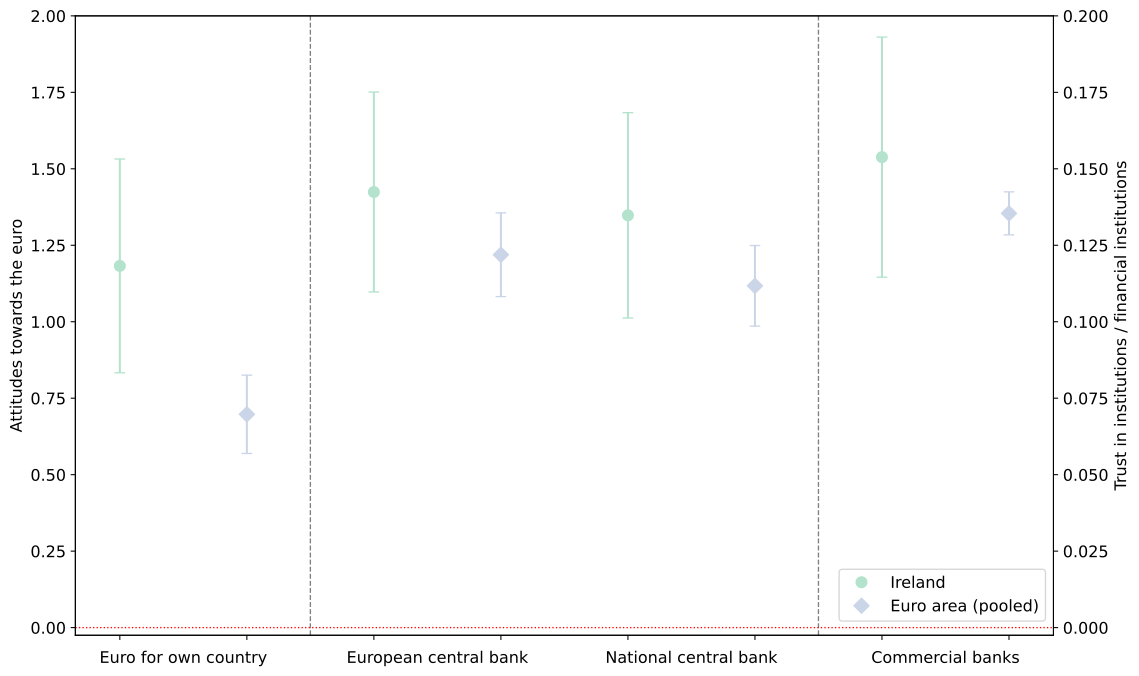
The point estimates and the 95 per cent confidence intervals for the analysis of the euro area pooled sample and Ireland individually are reported in Figure 4. The vertical axis on the left shows the scale for the attitudes towards the euro measure, whereas that on the right shows the scale for trust in central and commercial banks measures.
The analyses of both the euro area pool and all eleven individual countries reveal positive and statistically significant coefficients, suggesting that the willingness to adopt a digital euro for day-to-day transactions is positively associated with respondents’ attitudes towards the euro, as well as their trust in policy and financial institutions.
Trust in institutions is strongly associated with willingness to use the digital euro
Figure 4: Correlation between hypothetical digital euro usage for day-to-day transactions and trust measures
Source: Authors’ elaboration based on the CES. Wave 32 (August 2022).
Accessibility: Get the data in accessible format. (CSV 0.43KB)
In particular, in the euro area pool’s analysis, moving from a fully negative to a fully positive attitude towards the euro (i.e., shifting from 0 for “bad thing” to 1 for “good thing”) is associated with a statistically significant increase of 0.7 points on the 1-5 scale for use of a digital euro for day-to-day transactions, representing a 26.5 per cent increase relative to the sample mean of 2.6. Similarly, moving from zero to complete (value 10) trust in the ECB is associated with an increase of 1.2 points on the digital euro adoption scale, representing a 46.3 per cent increase relative to the mean (NCBs: 1.1, 42.5 per cent; commercial banks: 1.4, 51.3 per cent).
Although the estimates have wider margins of uncertainty, associations in Ireland appear to be stronger than those in most other individual countries and in the euro area pooled sample.
This analysis highlights that digital euro promotion strategies must account for how differential attitudes towards the traditional euro and trust in policy and financial institutions could shape adoption intentions across different national contexts.
Demographic Groups in Ireland
This section explores how digital euro awareness, hypothetical usage and features, as well as attitudes towards the euro vary across demographic groups within Ireland. This breakdown identifies which segments of the population are more receptive to the digital euro and which segments may require more targeted communication. The analysis focuses on four dimensions: gender, age, employment status, and financial literacy.
Digital euro awareness
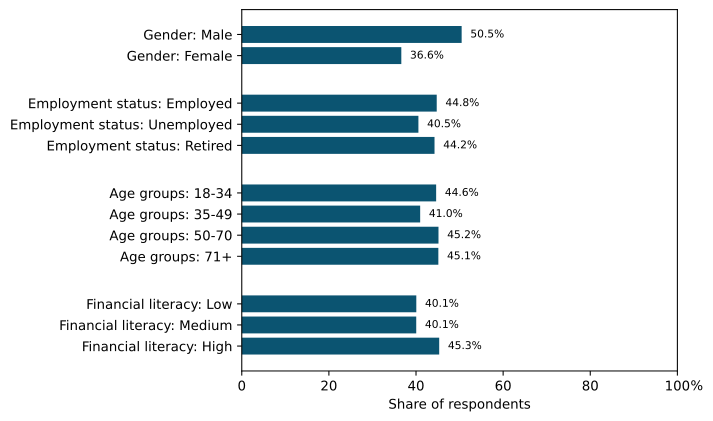
The weighted average digital euro awareness across cohorts of Irish respondents for all waves is reported in Figure 5. Awareness is broadly similar across most groups, clustering around 40-50%. Men report higher awareness than women, a pattern consistent with evidence showing greater male exposure to digital payment instruments and higher propensity to experiment with new payments technologies.
Employed and retired respondents display higher awareness than the unemployed. Differences across age groups (including four group categories: aged 18-34, 35-49, 50-70, and 71+) are more limited, with slightly lower awareness for age group 35-49, despite younger cohorts typically exhibiting higher digital readiness and older cohorts showing stronger preferences for cash.
Men, the employed, and the financially literate show higher digital euro awareness
Figure 5: Digital euro pooled awareness in Ireland by demographic groups
Source: Authors’ elaboration based on the CES. Pooled waves include 32, 44, 56, and 68, corresponding to years 2022, 2023, 2024, and 2025, respectively.
Accessibility: Get the data in accessible format. (CSV 0.11KB)
Financial literacy is positively associated with awareness, with respondents who show high financial literacy reporting greater familiarity with the digital euro than those who show medium and low financial literacy. This aligns with evidence that financial literacy reflects an individual’s ability to understand and evaluate financial instruments, as well as navigate new digital payment instruments.
Digital euro adoption likelihood
Questions on hypothetical usage and features of the digital euro are only asked in wave 32 (August 2022). Therefore, the figures in these two sections refer to that period only.
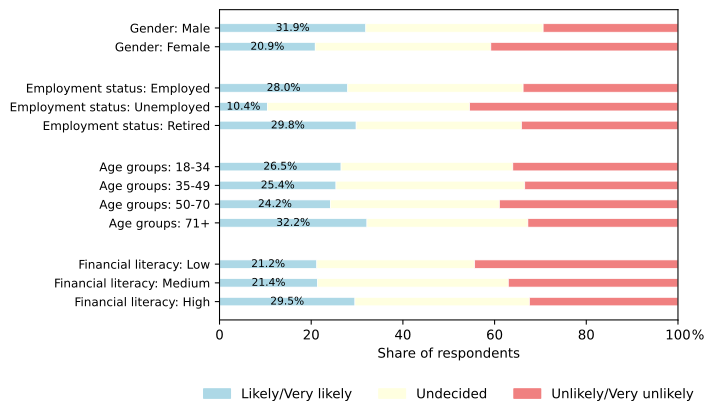
Around 30% of men, employed and retired respondents, those who show high financial literacy, and those aged 71 years or more would be likely or very likely to use the digital euro for everyday payments, based on survey responses at a point when the majority of people would have been unlikely to be familiar with the concept of a digital euro (Figure 6).
Men, older respondents, and the financially literate are most willing to adopt
Figure 6: Digital euro hypothetical usage for day-to-day transactions in Ireland by demographic groups
Source: Authors’ elaboration based on the CES. Wave 32 (August 2022).
Accessibility: Get the data in accessible format. (CSV 0.11KB)
Top three digital euro features
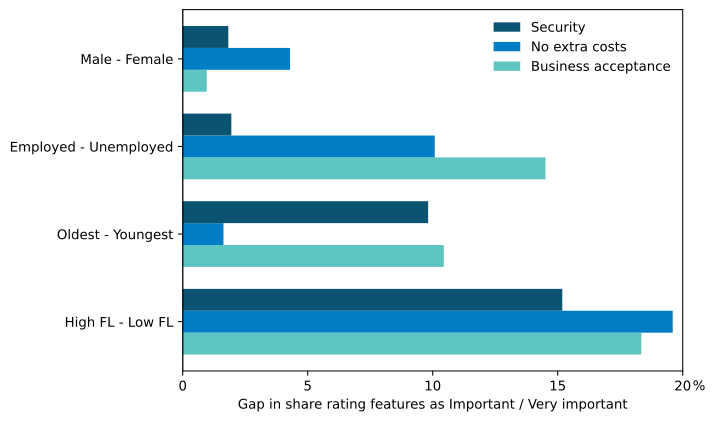
From the analysis of Ireland vs. euro area, it emerges that the three most desired features of the digital euro among Irish respondents are security, no extra costs, and business acceptance. Across all demographic groups, at least 63% of respondents consider these features “important” or “very important”. Therefore, here we focus on this combined share to highlight differences across groups. Differences between demographic groups for each feature are reported in Figure 7. Respondents who show high financial literacy place greater importance on all three features than those who show low financial literacy. Employment status also matters, especially for business acceptance. Notably, older respondents (aged 71 and above) value these features more than their younger peers (aged 18-34). By contrast, differences by gender are relatively small.
Financially literate and older respondents place greatest importance on key features
Figure 7: Differences by demographic groups in Ireland in rating top three features as “important” and “very important”
Source: Authors’ elaboration based on the CES. Wave 32 (August 2022).
Accessibility: Get the data in accessible format. (CSV 0.6KB)
Nevertheless, all demographic groups strongly value the three features. This suggests that: (i) the perception of safety is a core pillar of trust in the digital euro; (ii) the notion of “no extra costs” is universally resonant, suggesting that affordability increases public support; and (iii) widespread business acceptance is seen as essential for usability, not just a convenience. Overall, demographic differences are subtle, implying that preferences for digital euro design are shaped more by shared expectations of reliability and trust than by socioeconomic differences.
Attitudes towards the euro
Having shown that willingness to adopt the digital euro for day-to-day transactions is positively associated with attitudes towards the euro, we now zoom into how Irish respondents feel about the euro in its traditional form across demographic groups.
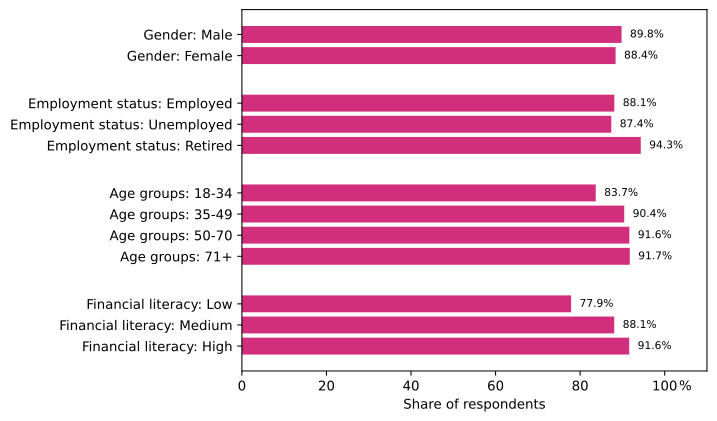
The weighted average attitudes towards the euro across cohorts for all waves is reported in Figure 8. The response is overwhelmingly positive, with around 90% of respondents describing the euro as a “good thing” in Ireland. Differences by gender and employment status are small, with retired respondents showing the highest positive attitudes. Younger respondents are somewhat less positive than older cohorts, and positive attitudes rise with financial literacy.
Support for the euro exceeds 90% across all demographic groups
Figure 8: Attitudes towards the euro in Ireland by demographic groups
Source: Authors’ elaboration based on the CES. Pooled waves include 32, 44, 56, and 68, corresponding to years 2022, 2023, 2024, and 2025, respectively.
Accessibility: Get the data in accessible format. (CSV 0.68KB)
These insights provide useful context for Ireland: the digital euro would be introduced against a backdrop of strong and broad support for the euro itself. This provides a favourable starting point, although trust in the euro as a currency may not automatically translate into trust in its digital counterpart, and it would still need to be matched by confidence in the digital euro’s specific features and use cases.
Conclusion
This Insight provides a baseline understanding of Irish attitudes towards a potential digital euro, drawing on survey data from 2022 to 2025. Three key findings emerge. First, Irish respondents show moderate enthusiasm for adoption, ranking fourth in the euro area, with trust in the euro and institutions strongly associated with adoption intentions. Second, within Ireland, awareness and adoption intentions vary modestly across demographics, with men, older respondents, and the financially literate showing greater receptiveness. Third, while 90% view the euro positively, digital euro awareness remains below the euro area average during the sample period.
This strong and broad support for the euro in Ireland provides a favourable foundation for introducing its digital counterpart. However, such a positive sentiment toward the euro may not automatically transfer to the digital euro.
Looking ahead, several questions warrant further research. How have awareness and attitudes evolved as the digital euro project has progressed? What specific features – such as offline functionality, enhanced privacy protections, or free-of-charge transactions – most effectively increase willingness to adopt? And what concerns present the most significant barriers to adoption across different groups? Future Central Bank of Ireland research will continue to explore these issues with updated data.
References
Allgood, S. and Walstad, W. B. (2015). “The effects of perceived and actual financial literacy on financial behaviors”. Economic Inquiry, Vol. 54, pp. 675-697.
Bańkowska, K., Borlescu, A. M., Charalambakis, E., Da Silva, A. D., Di Laurea, D., Dossche, M., Georgarakos, D., Honkkila, J., Kennedy, N., Meyer, J., Rusinova, D., Teppa, F., and Törmälehto, V. (2021). “Consumer Expectations Survey: an overview and first evaluation”. Occasional Paper Serie. European Central Bank.
Crouzet, N., Gupta, A., and Mezzanotti, F. (2023). “Shocks and Technology Adoption: Evidence from Electronic Payment Systems”. Journal of Political Economy, Vol. 131, No. 11, pp. 3007-3057.
di Maggio, M., Williams, E., and Katz, J. (2022). “Buy Now, Pay Later Credit: User Characteristics and Effects on Spending Patterns”. NBER Working Paper No. w30508.
Doerr, S., Frost, J., Gambacorta, L., and Qiu, H. (2022). “Population ageing and the digital divide”. SUERF Policy Brief, No. 270.
European Central Bank (2026). “Consumer Expectations Survey: Methodological information on the survey”.
Georgarakos, D. and Kenny, G. (2022). “Household spending and fiscal support during the COVID-19 pandemic: Insights from a new consumer survey”. Journal of Monetary Economics, Vol. 129, PP. S1-S14.
Lusardi, A. and Mitchell, O. (2014). “The Economic Importance of Financial Literacy: Theory and Evidence”. Journal of Economic Literature, Vol. 52, No. 1, pp. 5-44.
van der Cruijsen, C. and W. Broekhoff (2025). “Mind the Gap: Gender Differences in Household Payment Tasks”. De Economist, Vol. 173, pp. 385-424.
Endnotes