Innovation must be built on public trust – Governor Gabriel Makhlouf
18 September 2026
Press Release
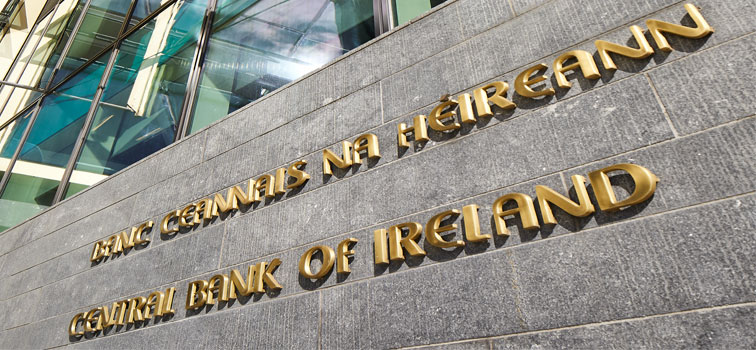
Central Bank of Ireland Governor Gabriel Makhlouf today (Friday 18 September) spoke at The Future of Finance Conference held in Dublin. Governor Makhlouf opened the conference with a focus on trust “At the Central Bank of Ireland, our work on the payments system is an important part of our economic, policy and regulatory work. And we approach it from a clear starting point: trust.”
“We have always had public and private money that co-existed, complemented and reinforced each other. The monetary system of the future need not be a departure from this, but rather an expanded framework in which both established and new forms of payment instruments can settle, be redeemed, be interoperable and be trusted“
Governor Makhlouf also said central banks will play an important role in shaping the future payments ecosystem, commenting “Trust in all providers of money must be assured for monetary and financial stability, and long-term prosperity.”
The Central Bank sees three broad policy areas as core to these aims:
Infrastructure: Modernising the infrastructure of central bank money, both facing consumers through the digital euro, and in the background settlement system using digital ledger technology, to ensure that riskless public money remains at the heart of the monetary system in the digital age. The Eurosystem is taking ambitious steps forward in both our retail and wholesale monetary infrastructure to meet this ambition.
Resilience: Private providers of payment services, including banks and the range of new entities that have emerged and continue to emerge, must be operationally and financially resilient to guarantee provision of core services. Regulation is adapting to ensure that the payments system remains safe as it evolves.
Innovation: Within a clear regulatory framework that prioritises safety and soundness, the private sector should be enabled to innovate responsibly, to promote competition that can provide greater choice, better quality service, or lower prices for consumers. The Central Bank of Ireland places great importance on deepening its engagement with innovative private firms so that we can take a system-wide perspective that works in the public interest.
To more deeply understand the economic implications of changing payments system in Ireland, the Central Bank has conducted new research on consumers and merchants. The studies reveal:
- The cost of handling payments to Irish merchants is estimated at close to €1bn annually. And the distribution of those costs in uneven, with smaller businesses facing disproportionately higher per-transaction costs than larger ones.
- Irish households are adapting their payments habits rapidly, with close to half of young households now using mobile wallets most frequently when paying, and more than half are now using a digital bank for some financial services.
- One fifth of households report using cash most often, testament to its ongoing importance within the payments system.
Commenting on the survey, Governor Makhlouf said we need to pause and remember what is most important to Irish households - “When we ask consumers what matters most to them in choosing a payment instrument, the answer is not speed, convenience, or cost. It is security, reliability, trust, and fraud safeguards. Innovation that fails to honour that hierarchy will not earn durable public trust, however frictionless it may be.”
Governor Makhlouf concluded “The future of the payments system has not yet been written, but central banks and regulators will actively shape its evolution. We will do so in partnership with the private sector, enabling the innovation the economy needs, while safeguarding trust and stability on which the system depends.”
ENDS
Notes
Three papers were published alongside the Governors speech -
- Signed article - The Economics of the Evolving Payments System (PDF 1.54MB): Implications for Policymaking, by Gillian Phelan and Fergal McCann, with contributions from Maria Elena Filippin, Alexis Ladasic, Michele Pelli and Anne Marie McKiernan. This Signed Article asks how innovations in payments – from contactless cards and digital banks to stablecoins and central bank digital currency – could reshape the economy, drawing on original Central Bank survey evidence on household payment preferences and new estimates of the cost of retail payments to Irish businesses.
- Signed article - How Ireland Pays: Mapping the Payment Ecosystem (PDF 1.21MB), by Brian Gallagher. This Signed Article provides a baseline description of Ireland's retail payments landscape, charting the roles of traditional banks, digital banks, and non-bank fintechs, and identifying three structural shifts likely to reshape the ecosystem in the years ahead: (i) the continued unbundling of payment services from credit provision; (ii) the adoption of technology-enabled innovative services by Irish-domiciled payment firms; and (iii) the emergence of new payment instruments such as account-to-account (A2A) payments, stablecoins and the digital euro
- Behind the data - Changing Payment Patterns in Ireland: National and County-level Trends, by Patrik Gorše. This Behind the Data analyses how Irish payment behaviour has changed since 2022. It compares national trends with the euro area, examines how online spending is catching up with in-store payments, and finds that digital payment adoption is progressing at similar speed across Irish counties.
Further information:
Media Relations: media@centralbank.ie